

Cosplay Crafting
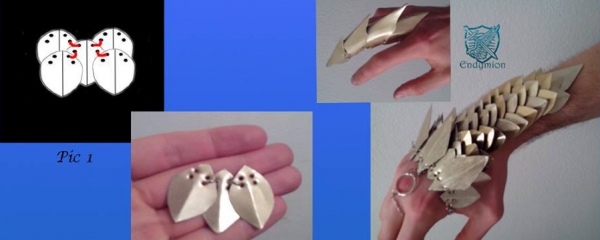
I love crafting. It was one of my major motivations when beginning to dabble in cosplay. Learning new things is one of my favorite things to do, and this hobby gave me the wonderful opportunity to do just that. In my years of cosplaying I have learned quite a few tricks and I also noticed a certain learning pattern with many cosplay crafters. Most people start with copious amounts of cardboard. Making props and rigid costume parts from this material, in the beginning might seem quite logical. After all it's readily available, fairly cheap and easy to manipulate. Usually people tend to combine it with other glues and stronger base materials. This is all ok until the crafter understands the basics of prop and costume construction. However, soon the crafter realizes the several major setbacks to creating cardboard based props and costumes: they deform easily (no matter how much you coat them in pva glue), break apart, absorb moisture easily (especially nasty on a hot day) and generally don't last more than a couple of longer con outings and a few photoshoots. The next level would be foam ,insulation and plastic materials. This is the point where the crafter starts to expand his (or her) knowledge of basic materials and techniques. This is the point where the crafter starts to improvise and implement more and more elaborate solutions to construction problems; from using pvc pipes of all gauges to plastic buckets, bowls, flower pots and other seemingly innocent household items for costume creation. The foundation for this stage is hot and super glue, acrylic paint and
varnish, and usually is followed by copious amounts of scorch marks from the glue gun and cuts from an exacto knife. This is the point where the would-be master crafter starts thinking further and wonders how to put in more character and cool features into his (or her) costume, and that leads us to the next level. By this time the crafter has advanced to a upper intermidiate level, has seen a fair share of cons, and probably has hundreds of hours of work put into costume and prop making. Now enter: thermoplastics, resin casting, light metal and leather work and simple electronics (blinkig lights and small motors). By this point the cosplayer probably has a steady source of income and can devote more money (less time though) to his or her projects. This is the time when the cosplayer begins to work on more and more professional looking costumes, and might even make a business for him or herself. I've personally seen people do this, albeit only a select few have turned it into a full-time job. I like to believe that there is a level beyond this one. This, almost mythical status, is currently reserved for the most resourceful, experienced or just plain lucky of cosplayers (or in this case cosplay enthusiasts). The wonders these people might have access to are vacuum form plastics, thermoplastics, 3D printed parts, complex electronics (full animatronics and lightshows), casted foam latex masks, complex metal and leatherworks, etc. This is a level where the line blurs between a cosplayer and a professional costume and prop maker, and I personally think it is achievable for an enthusiast to reach this level- given enough time, money and luck. All of this doesn't mean that all crafters go through this "leveling" system. Some people that are already talented artists might start from the middle tier, or even the professional one, if they are already proficient enough. Some are happy being just proficient enough to create a quick throwaway costume for each occasion, not bothering with complex techniques and large projects. In the end, it all comes down to what your passion is and how you decide to express it. And if you have the will and persistence, your crafting hobby can really take you places...how far is your choice.
To add a comment to the blog, you have to first join the site or login as a user

Endymion ,
Thanks. I really like to think that this is just a way to express myself. :)
11 years ago

Categories
Most Popular
-
Cosplay Crafting
April 25, 2016
-
On Cosplay
May 4, 2016
-
Archive
